There is a principle of education that is often left out of dive instructor education which I think is really important for instructors to consider; Maslow’s Hierarchy of Needs. This is a quick intro to the model, along with why it’s so important for instructors to be aware of it and how we can use it to improve our courses.
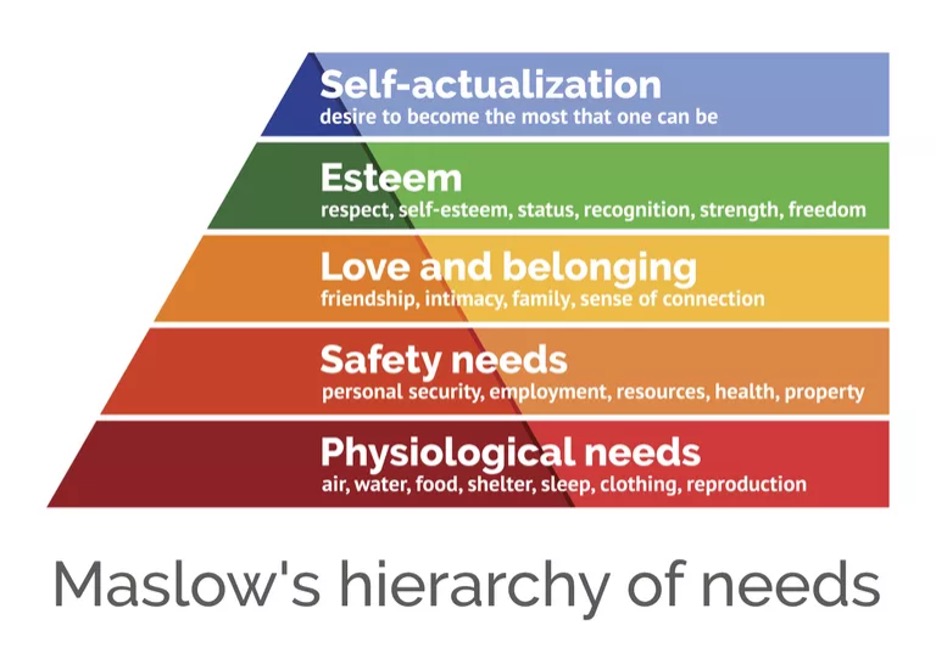
Abraham Maslow came up with the hierarchy which stated that higher needs won’t generally be met until lower needs are satisfied. At a basic level, this is true, someone is not prioritising looking for friendship if they don’t have food, a place to sleep or clothes to keep them warm. However, students will not totally fulfil every level before moving up to the next. So as instructors we need to be aware of all of them and learn how to help our students meet their needs.
As shown in the diagram, physiological needs are our base needs. If a student is hungry, thirsty, cold, hot or tired, then thoughts of these will take priority over everything else. Even if they don’t, their influence will certainly take a decent amount of their capacity away. As instructors, it’s very easy to help our students meet these needs but we must make sure that we’re looking out for them. The easiest way of accommodating these are also the most simple – schedule breaks in for lunch or snacks, make sure everyone has access to drinks and check what students are wearing, not just in the water but also on the surface. A cold (or over-heated!) student will not be taking information in as well as one who is comfortable. Also, look after yourself in this regard; make sure you are suitably energised and hydrated prior to and during a class.
While that sounds straight forward in principle, the reality is that we’ve all had classes that are running late and skipping a lunch break can seem like the quickest way to catch up. Perhaps you just want the student to practise a skill one more time before you get out of the water, but you suspect they might be getting cold. In actual fact, not accommodating their needs will slow you down in the long run, as you’ll find students will simply start to switch off. It is our job to make sure we have scheduled these activities to cover both the students and our own needs – making sure we’ve given students information about appropriate thermal protection, lunch arrangements and class timings beforehand.
Next up we have safety needs. If our students are concerned that the environment isn’t safe, again, they’re not going to be learning. Perceived safety can be anything from making sure we’ve chosen a suitable confined water site for their first ever in-water session, to making sure they have a safe place to leave their belongings while they’re in the water, or feeling that we are looking out for them so they don’t get lost.
The next one might seem a little over the top for an instructor-student relationship but I’m not proposing you need to start introducing your students to your family! What we do need to do is watch out for inclusivity vs exclusivity. If a student is left out of group conversations, is the one always chosen last for the buddy pairings or is in a group where the others already know each other, the instructor might have to work a little bit more at bringing them into the group. This starts off with getting everyone to introduce themselves at the start of a course, bringing them into the conversation by asking open questions (ones without a yes or no answer) and maybe mixing up buddy pairs as the course progresses. Bear in mind that some people are naturally quiet and are perfectly happy just listening, so you may need to check-in with them on their own to make sure they’re ok.
Esteem is probably the easiest one to both build up and knock down. I have met instructors who spend the whole course belittling their students in the mistaken belief it “builds character and resilience”. Nothing is further from the truth and while we do need to make sure we are correcting mistakes, if a student is getting everything right first time and not making any mistakes then what do they need you for?! Training courses are where students should be making mistakes as they will remember and learn from those. When they do something correctly however, it’s equally important to reinforce that. During debriefs I focus just as much on what went well as what they can improve on. If they’ve had what they perceive to be a “bad” dive, then pointing out the good things they did will help build their self-esteem. This doesn’t have to just be the skills, also think about how their awareness was during the dive (“Well done for looking at your buddy often and positioning yourself next to them”)
The final level of self-actualization is one that not all students will be motivated to reach but some will reach this level before others. As this is a need that comes more from within, as instructors we can act as a guide to help students that want to progress further. This may be by improving their skills, taking further classes or diving in different conditions.
One very useful tool from the medical sector is the HALT system that many hospitals have introduced to check on the well-being of staff. HALT stands for Hungry, Anxious or Angry, Late or Lonely, and Tired. There are two ways of dealing with this: firstly, having a HALT check-in when the shift starts, to capture anything going on in their lives which might impact their performance, and secondly, any staff member can flag up a HALT issue at any time, which must be addressed as soon as appropriate. Some things that might not appear stressful to you (such as being late) are stressful to others, and this stressor might be enough to increase the stress level to a point where they’re unable to continue or pay attention to the activities/risks being faced. Checking on and looking after people’s basic needs helps to deal with these issues.
Instructors can also help to build a safe psychological environment to allow students to express when their needs aren’t being met. One of the easiest ways of doing this is admitting to your own needs, it’s surprising how many times I’ve mentioned I’m hungry after a dive to have the student admit they’re starving too!
Hopefully this has given you some useful tools to use when teaching, as well as some points to consider. Let me know in the comments if you have any techniques you use, I’d love to hear them.