My friend was cooking a meal for her family and before putting the meat in the tray, she cut the ends off. When her young daughter saw her do this, she asked why. My friend replied “it’s what I’ve always done; it’s how my mother did it”. The daughter was curious, so next time they went to visit her Grandmother she asked her “Why do you do it that way?”
Her Grandmother replied “It’s how I’ve always done it, my mother did it that way”. Shortly after, the daughter visited her Great Grandmother and asked her the same question. Her Great Grandmother said “I only had a small tray, so to make the meat fit I used to have to cut it down”
“We’ve always done it that way” is one of my most hated phrases. Not because there’s anything wrong with finding a good procedure and sticking to it. Sometimes that can be a good thing. However that phrase implies that change hasn’t even been considered, or even worse, it’s been thought of but dismissed because “this way works”. As humans we’re efficient creatures. Some would even say lazy. We’ll always look for the easiest way of doing something. The problem comes when we’ve found what is the easiest way at that moment and never look again.
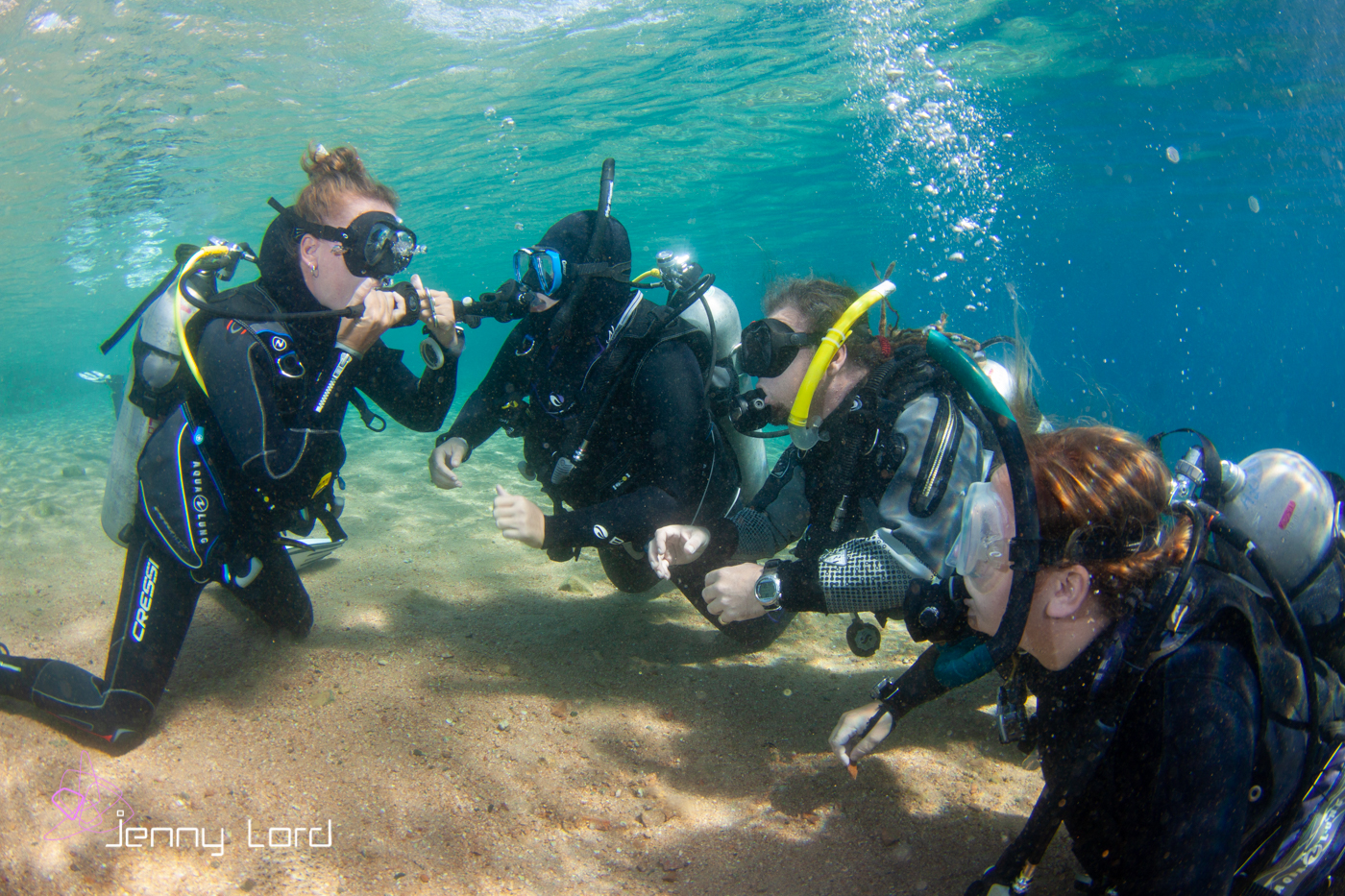
A great example is a current contentious issue in teaching diving: on-the-knees vs neutrally buoyant. Diving has been taught for decades by placing the student, negatively buoyant, on their knees on the bottom. It makes sense, if they are not able to control their buoyancy then they can’t possibly be expected to try and learn a new skill whilst also having their attention taken by trying to control where they are in the water. This is especially true if you don’t have any way of controlling buoyancy aside from by finning, as was the case before the invention of the ABLJ (or more commonly used now, the BCD). However, buoyancy control devices of some kind have been around for over 60 years and for many decades it’s been unusual to find someone diving without one, let alone being taught that way. So why stick to the on-the-knees principle? Because change is hard. If you’ve always put your students on their knees (and found you have good control of them), then what is the incentive to change? For course directors and instructor trainers who’ve been doing it this way (successfully) for years, it is the logical thing to do to pass on that method to their instructor candidates.
So what drives change? To use the example above, rewards and social pressure. Instructors who’ve learnt how to teach neutrally buoyant have seen improved results. We are results based, so turning out students who are “better” than others is a positive result, we feel as if we have achieved. Also, it is now widely considered to be counter-productive to teach divers to kneel, when the rest of the time they’re told never to touch the bottom. When you’re with divers who are dragging themselves along the bottom it’s not unusual now to get at best a disapproving look or at worst a video on social media with a “look at how bad this instructor is” commentary. This drives us to improve how we’re teaching to conform with society.
Change is hard work. Learning how to teach in a different way requires effort. Sometimes we forego the effort to get something that is considered “good enough”. But if we can convince ourselves to make the effort, it is worth considering that sometimes it may make our lives easier in the long term.
So keep asking “why have we always done it that way?” It sometimes produces solutions that actually make things better for us. We just need to try to be less lazy!